Construction defect · Defects & construction flaws
Facade defects: render, bricks, joints in new-builds
How to detect a facade defect?
A new facade must be homogeneous, with no cracks, no broken or misaligned bricks, with full and regular mortar joints. Common defects: render cracks (often vertical at corners of openings), white efflorescence (crystallisation salts = damp), split or chipped bricks, hollow or missing joints, uneven render colours, plumb defects visible with a long mason's rule (2 m). Inspect in dry, well-lit weather, ideally midday, and use binoculars for upper floors.
Before — compliant
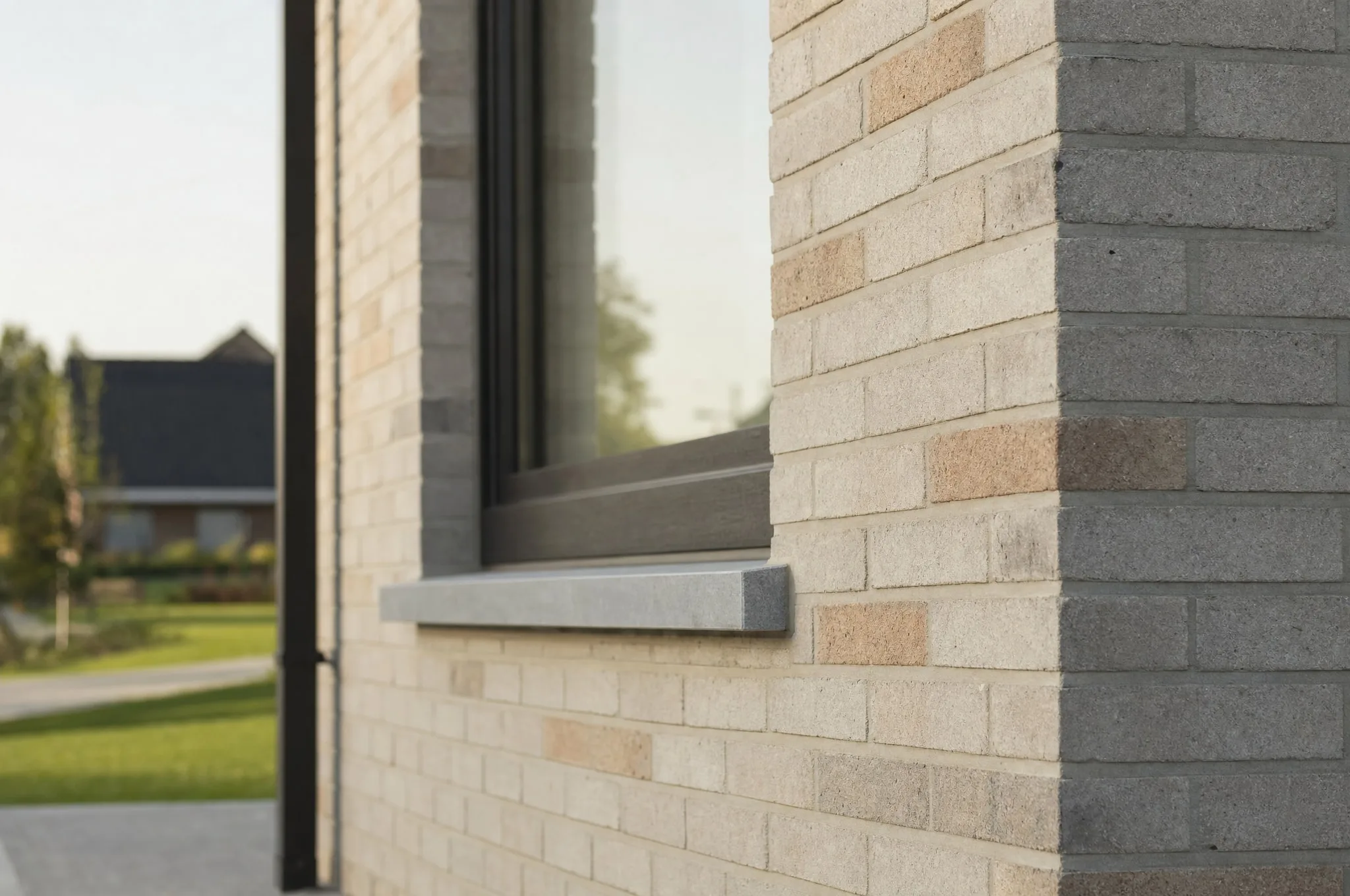
No cracks · sharp joints · compliant plumb
⚠ After — defective
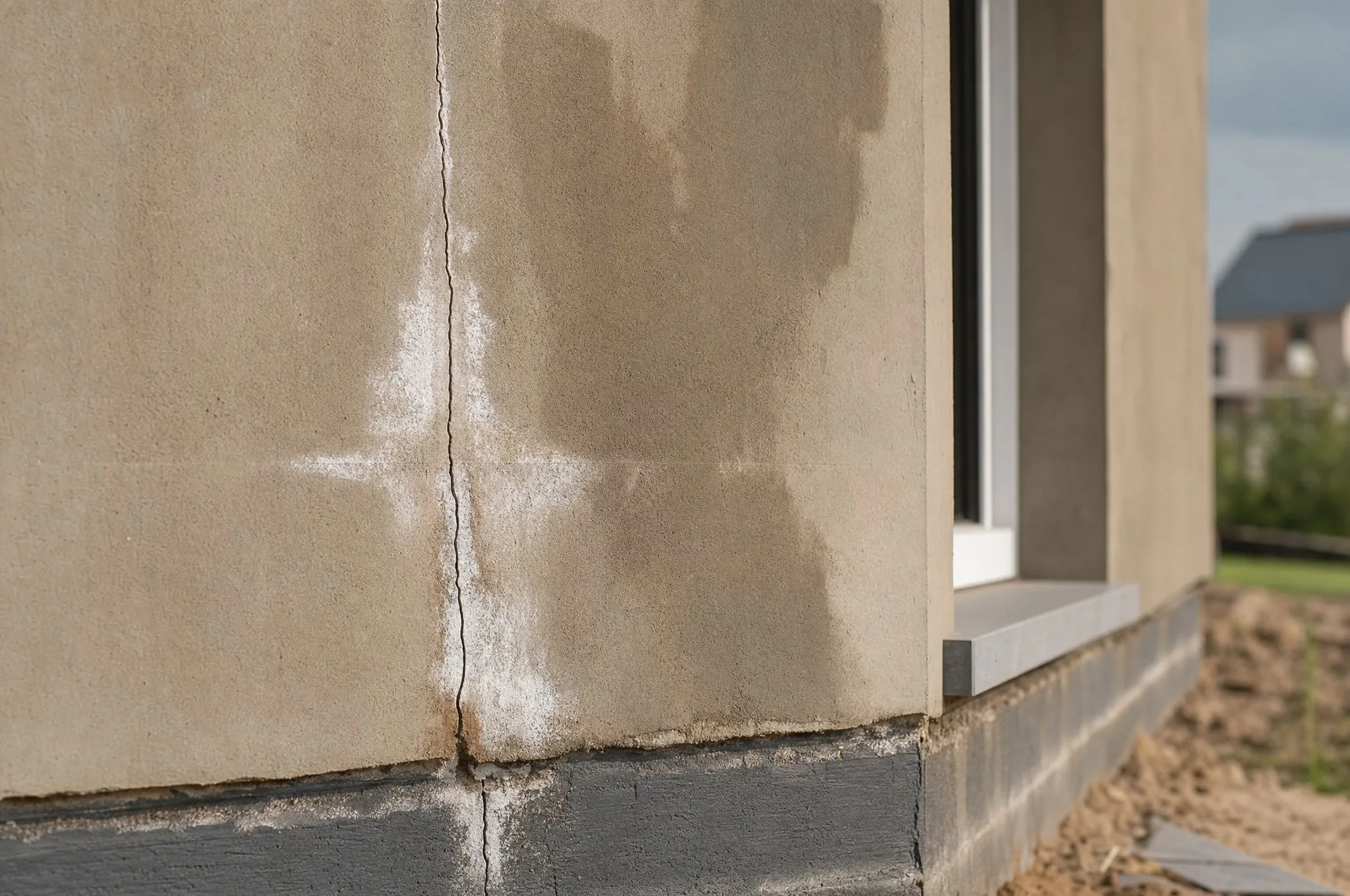
1.5mm crack · visible damp · to be reported
Reporting procedure in 4 steps
A defective facade involves aesthetics (two-year) and often watertightness (ten-year). Documentation and timeline are decisive.
- 1Photograph and measureHD photos of each defect with scale reference. Measure crack width with a crack gauge. Note date, exposure (N/S/E/W), weather conditions.
- 2Check evolutionPlace plaster witnesses on cracks, recheck at 30 and 60 days. Note efflorescence and damp zones after driving rain.
- 3Formal noticeRegistered letter to the contractor within 90 days. Attach photos, measurements, mention NBN EN 13914 standard for render, or TV 245 CSTC.
- 4Facade expert assessmentIndependent masonry expert in case of dispute. Admissible report · penetrometer testing, damp soundings, flatness measurements · from €420 VAT incl.
Who pays for the repair? Responsibility table
The main contractor is responsible. The nature of the defect determines the applicable warranty.
Defect type
Contractor
Owner
Insurance
Render crack < 0.3 mm
✓ two-year warranty
—
—
Through-crack > 2 mm
✓ ten-year liability
—
ARI
Broken / misaligned brick
✓ two-year warranty
—
—
Missing / hollow joint
✓ two-year warranty
—
—
Interior infiltration
✓ ten-year liability
—
ARI + structural
Get an inspection
Independent inspection of your new facade
Admissible report · 5-day turnaround · from €420 VAT incl.
FAQ
Common questions about facades
Is a 0.5 mm crack a defect?
Worth monitoring. A crack under 0.3 mm is generally linked to mortar shrinkage. Beyond that, or if it evolves, report by registered letter. Place a plaster witness to track evolution over 30 days.
What are the white efflorescences on my facade?
These are crystallised mineral salts caused by damp migration. Always a sign of abnormal water movement in the masonry. Covered under two-year warranty (aesthetic) or ten-year liability (infiltration).
My contractor says cracks are normal in the first year. True?
A few shrinkage hairline cracks (< 0.2 mm) are normal. Any wider, evolving, through-going crack, or with efflorescence is NOT normal and must be reported immediately.
My facade bricks have visible chips. What should I do?
Reportable aesthetic defect under the two-year warranty. The contractor must replace damaged bricks. Document with dated photos and a visible rigid ruler.
How much does a full facade-crack repair cost?
Between €1,500 and €12,000 VAT incl. depending on extent (local repair, full rendering, dismantling and rebuilding). At the contractor's expense if construction defect confirmed.