Construction defect · Defects & construction flaws
Roof framework defects: detect, prove, get repaired
Severity ⚠ High
Reporting deadline 90 days
Warranty Ten-year
Responsibility Contractor
How to detect a framework defect?
A sound framework is straight, with no visible deflection, no repeated cracking, and fastened by sturdy joints (bolts, hangers, metal plates). Warning signs: visible deflection of a purlin or rafter, missing or poorly fixed struts, through-cracks in a truss, oxidation of metal connectors, traces of damp or mould on the wood. Inspect with a torch from the attic, photograph the joints, measure deflections with a string line. A new framework must show no deformation visible to the naked eye.
Before — compliant
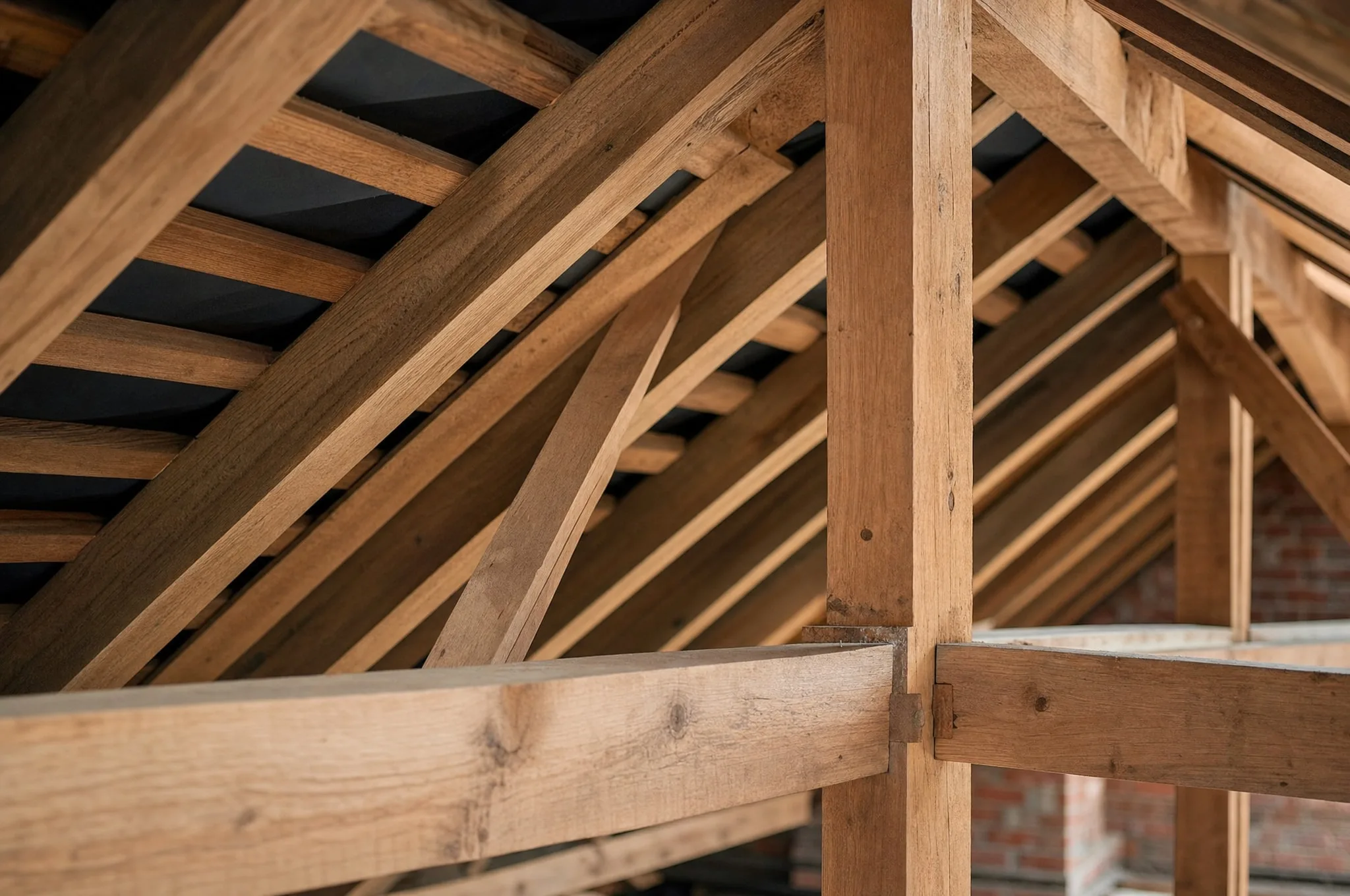
Straight trusses · sound joints · full bracing
⚠ After — defective
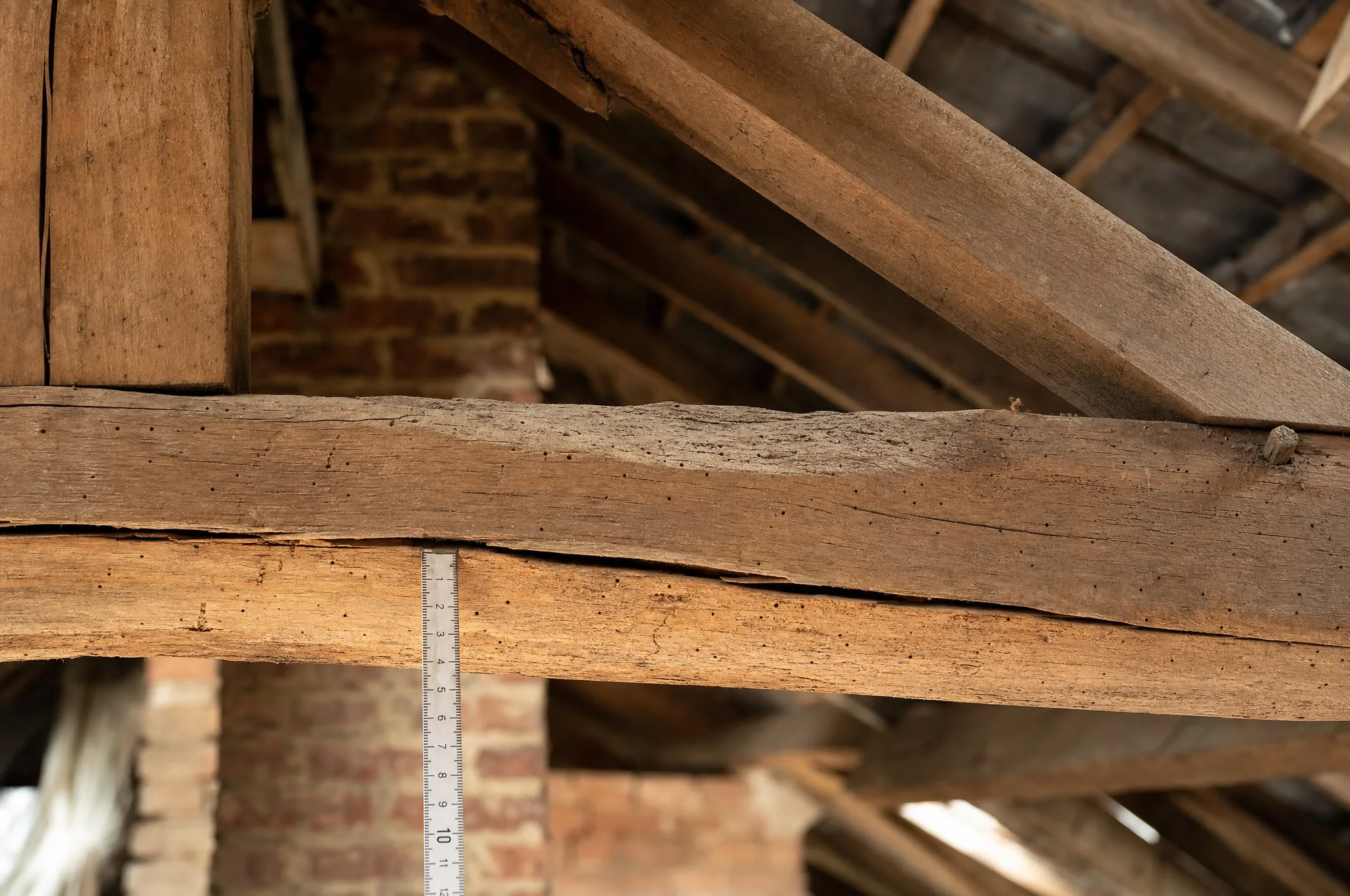
Visible deflection · missing strut · to be reported
Reporting procedure in 4 steps
A framework defect almost always falls under the ten-year liability, since building stability is at stake. The procedure must be rigorously documented to preserve your rights.
-
1
Document the defect
HD photos of trusses, purlins, joints. Measure deflections with string line or laser. Note date, precise location, conditions (recent wind, snow, etc.).
-
2
Check the framework plan
Compare the executed framework to the architect's plan. Identify missing struts, hangers, plates. Keep approved plans as evidence.
-
3
Formal notice
Registered letter to the contractor within 90 days. Attach photos, measurements, copy of plans. Demand repair or adversarial assessment.
-
4
Independent expert assessment
If disputed, commission an independent structural expert. Report admissible in court. Cost recoverable if defect confirmed (typically 450 to 800 euros).
Who pays for the repair? Responsibility table
The framework supports the roof and contributes to overall stability. Its failure engages the contractor's ten-year liability and sometimes that of the architect.
Visible truss deflection
✓ ten-year liability
—
ARI if applicable
Missing bracing
✓ ten-year liability
—
—
Defective fixings
✓ ten-year liability
—
—
Untreated / split timber
✓ two-year warranty
—
—
Plan error (architect)
✓ + architect
—
Architect PI
Get an inspection
Have your framework inspected by an independent expert
Adversarial report admissible in court · 5-day turnaround · from €450 VAT incl.
FAQ
Common questions about framework
My framework creaks at night. Is it serious?+
Wood works with variations in moisture and temperature. A few occasional creaks are normal in the first year. But repeated, loud, localised creaks at a specific spot warrant visual and photographic inspection.
How do I check that a strut is correctly fitted?+
A strut must be in firm contact with the truss and king post, fixed by metal hanger or mortise-tenon. Any gap, visible offset or fixing by a simple nail is a defect to be reported.
My contractor says the deflection is normal. True or false?+
A deflection greater than L/300 (i.e. 1 cm for 3 m span) on a NEW framework is NOT normal. Have it measured by an expert and demand a structural calculation to verify compliance.
How much does an independent framework inspection cost?+
Between €450 and €800 VAT incl. depending on complexity (traditional framework or industrial trussed rafters, attic accessibility, number of trusses to inspect). Cost recoverable if defect confirmed.
Does a defective framework risk collapsing?+
Rarely in the short term, but an undersized or poorly braced framework can fail under exceptional snow load or strong wind. Preventive repair is always less costly than a disaster.