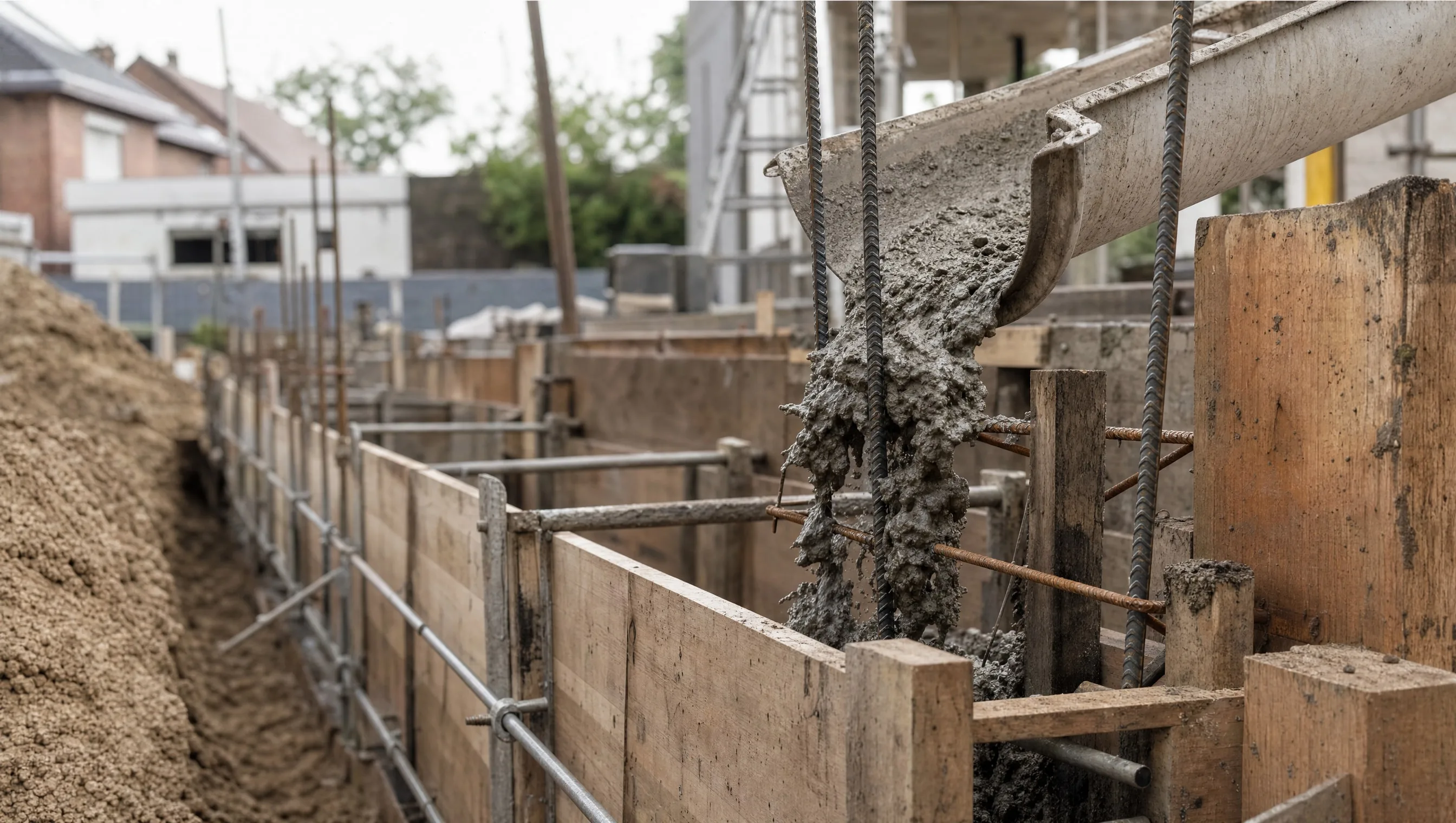
A defect covered by a plasterboard is a defect that no longer exists in a judge’s eyes. Unless you have the construction-site photo taken a week before installation. It’s that simple — and that decisive. In five years of provisional receptions, I have seen some fifty files where the presence or absence of weekly photos has tipped the outcome of a dispute. Here is the method I recommend to all my clients, from the pouring of foundations.
Why document continuously
A construction site is an environment where evidence disappears quickly. A reinforced concrete tie-beam defect is invisible once masonry is built up. Poorly installed insulation no longer shows once the vapour barrier is pulled. A badly sized utility duct is buried in plaster 48 hours later. When the defect manifests itself — often 12 to 36 months after reception — it is too late to demonstrate the causal chain, unless you photographed the critical stage at the right moment.
The legal value of a construction-site photo, in Belgian law, depends on three criteria:
- Certain dating (EXIF metadata, date/time stamp, dated witness visible)
- Identifiable location (recognisable room, floor, orientation)
- Storage before the dispute (timestamped cloud, email to self)
A photo taken on a phone, dated by the app, stored in a cloud with server timestamp, is proof before a court of first instance. I defended three files on this single basis between 2023 and 2025.
Frequency and useful angles
My rule for clients I support: one weekly visit, ten to fifteen photos per visit, seven angles covering the exterior (façades, roof, terrace, visible foundations, surroundings) and three or four per floor inside. Systematically add a photo of the date on a daily newspaper, or activate the date/time stamp of the photo app (iPhone: Metadata app; Android: Open Camera or Timestamp Camera).
For critical photos of structural areas, add:
- A metal ruler or an unfolded tape measure in the frame (scale)
- A business card or handwritten note with location
- An annotated plan indicating the room and orientation
These three elements transform a banal photo into an enforceable documentary item.
Phases never to miss
Five moments make photography absolutely indispensable. If you can’t photograph everything, at least photograph these five stages:
- Foundation pouring (before backfill, reinforcement visible)
- Placing of reinforcement and tie-beams in reinforced concrete (footings, lintels)
- Insulation installation (before vapour barrier, thickness visible)
- Routing of utility ducts (before partitions, schema identifiable)
- Waterproofing membrane laying on flat roof (before gravel or paving)
Each of these phases will be invisible 48 hours later, and each corresponds to a frequent cause of hidden defect activatable under the ten-year liability (10 years) or the two-year warranty (2 years).
Tournai 2025 case
My client had photographed, without thinking much of it, the routing of the MVHR under sloping roof before the plasterboard was installed. Three months after reception, significant air leakage at the duct level, condensation on the ceiling, black traces appear. The contractor denied touching the zone and blamed the defect on abnormal use of the ventilation.
The photo, dated and geolocated, showed a duct deviation non-compliant with the plans and a poorly tightened connection. The adversarial expert report was decisive. Complete rework at the contractor’s expense: 18,200 €, expert fees included. Without the photo, the file would have been lost at first instance.
Pitfalls to avoid
- Don’t delete “useless” photos: you don’t know what will serve
- Don’t settle for distant photos: detail prevails over wide shot
- Beware of blurred photos: redo them on site if necessary
- Always back up on two media (phone + cloud)
- Document the inspection visit dates (electrical, gas, surveyor)
What next?
If you’re starting a site or are mid-construction, my firm offers a weekly professional photographic follow-up as part of the construction audit and Breyne Law support missions. For lighter follow-up or a quick start, request a free quote specifying the current phase of the work.