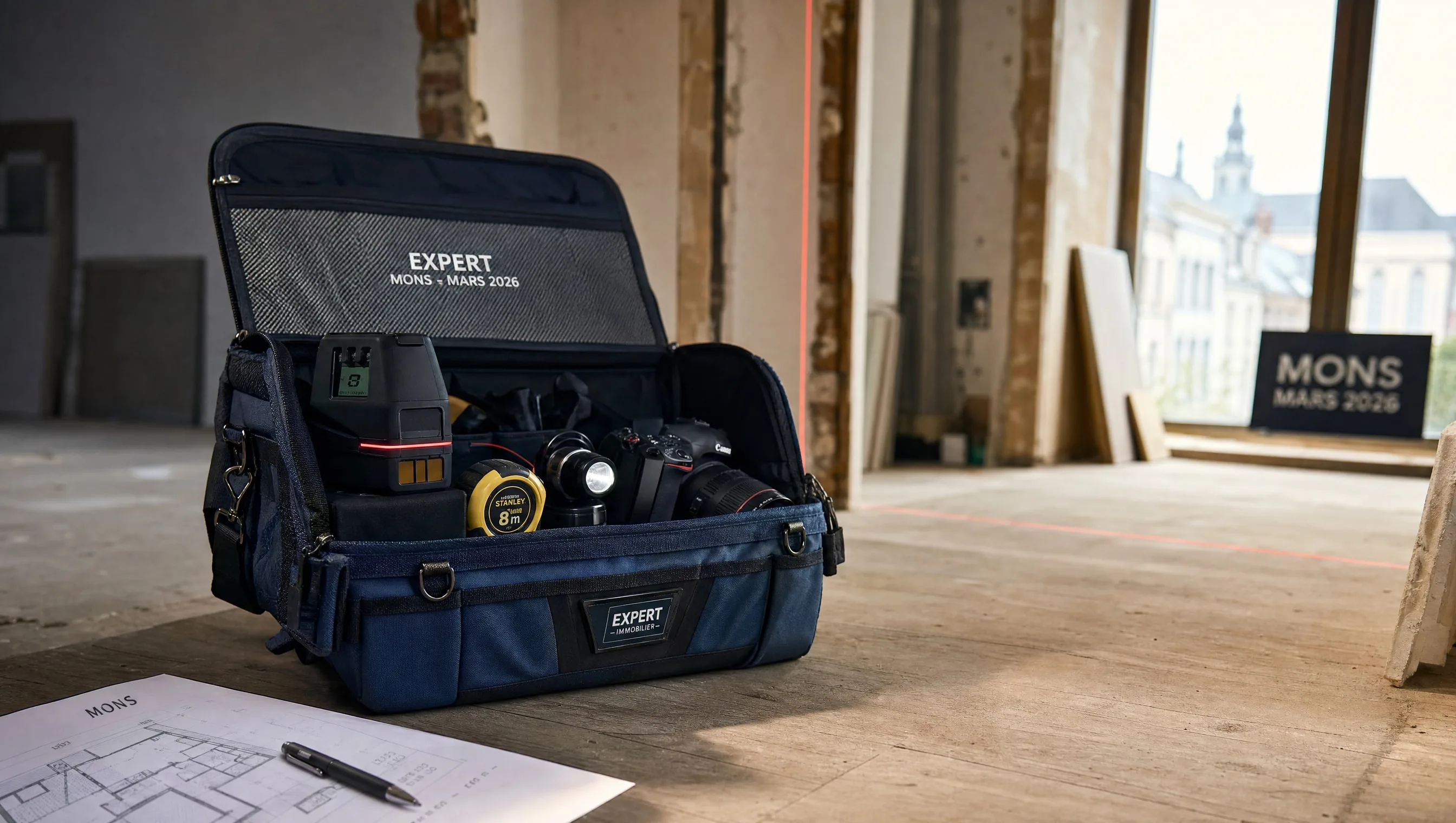
An effective provisional reception is one that follows a methodical order. Here is the sequence I systematically apply during visits in my practice, with the tools I bring out at each step and the recurring defects I detect. This skeleton has been refined over 600+ provisional receptions between 2021 and 2026, and lets you cover an entire standard single-family home in 4 to 6 hours without missing anything.
Before you start: the toolkit
The complete kit I bring to every site:
- 60 cm spirit level (€20)
- 2 m metal rule (€15)
- 5 m tape measure (€10)
- Rotary laser level (€95)
- Powerful 800-lumen torch (€35)
- Digital multimeter (€25)
- Infrared thermometer (€28)
- Camera with metal rule (smartphone OK)
- Digital calliper (€22)
- Digital hygrometer (€15)
- Notebook and indelible marker (€5)
Total budget: about €280 if you buy new, half that second-hand. Investment to be amortised over your entire homeowner career.
The 9 zones, in order
1. Outdoor facades (15-20 min)
Render, joints, downpipes, position of ventilation grilles, perimeter sealing of openings, cladding.
2. Roof and zinc-work (15-20 min)
Inspection with a laser rangefinder from the ground, condition of tiles/slates, gutters, downpipes, chimney junction, ridge, flashings.
3. Basement and cellars (25-35 min)
Structural cracks, tanking waterproofing, ventilation, damp marks. See 10 provisional reception mistakes for cracks to watch.
4. Attic (20-30 min)
Visible insulation, airtight membrane, damp marks on the ceiling, airtight access hatch.
5. Kitchen and bathroom (30-45 min)
Connections, waterproofing, drainage slopes, mixers under load, sanitary fittings. See plumbing reception checklist.
6. Bedrooms and living room (45-60 min)
Floor flatness (2 m rule), skirting alignment, door operation, paintwork, electrical sockets.
7. Exterior joinery (20-30 min)
Perimeter joints, closure, hardware, sealing, glazing Uw compliant with contract.
8. Technical equipment (30-45 min)
Boiler, MHRV, electrics, hot water, see water and heating test and electrical reception checklist.
9. Technical documents (15-20 min)
Final EPC, RGIE/AREI, CERGA gas inspection, product datasheets, as-built plans, ten-year liability certificate.
The key moment: the cold synthesis
After the visit, allow 60 to 90 minutes to re-read the notes away from the contractor, ideally with a coffee and the printed minutes in front of you. That is when forgotten items resurface.
Never sign on the same day on site — insist on a deferred signature within 24 to 48 hours. No law obliges you to sign on the day of the visit. This cold pause saves cases.
The clock trap
A reception rushed in 2 hours on a 180 m² house is a failed reception. If the contractor pressures you, it is the signal that he has something to hide. See provisional reception duration for benchmark durations by type.
Pitfalls to avoid
- Don’t start with the finishes: start with the structure
- Beware of end-of-day visits (insufficient light)
- Systematically check the 9 technical documents
- Test each tap and each socket individually
- Request a deferred signature of 24-48h
For official Belgian construction standards, see CSTC — Belgian Building Research Institute.
What next?
If your reception is approaching and you want to secure the coverage of the 9 zones, my practice offers a provisional reception expert who methodically follows this grid, or a site pre-visit for prior validation.