Construction defect · Defects & construction flaws
Floor and tile defects: flatness, joints, cracks in new-builds
How to detect a floor defect?
A compliant floor must be flat (2 m rule, tolerance 5 mm), with no loose tiles, no missing or cracked joints, no parquet creaking underfoot. Test: 2 m mason's rule placed on the floor, gap visible under the rule. Tap each tile with a key: dull sound = bonded, hollow sound = loose (report). Walk on all the parquet: localised creaks = badly screwed joist or badly nailed parquet. Check tile joints: continuous, smooth, with no hollow or excess. Angles: sharp right angle, no badly cut bevel. Skirting boards: flush, no gaps.
Before — compliant
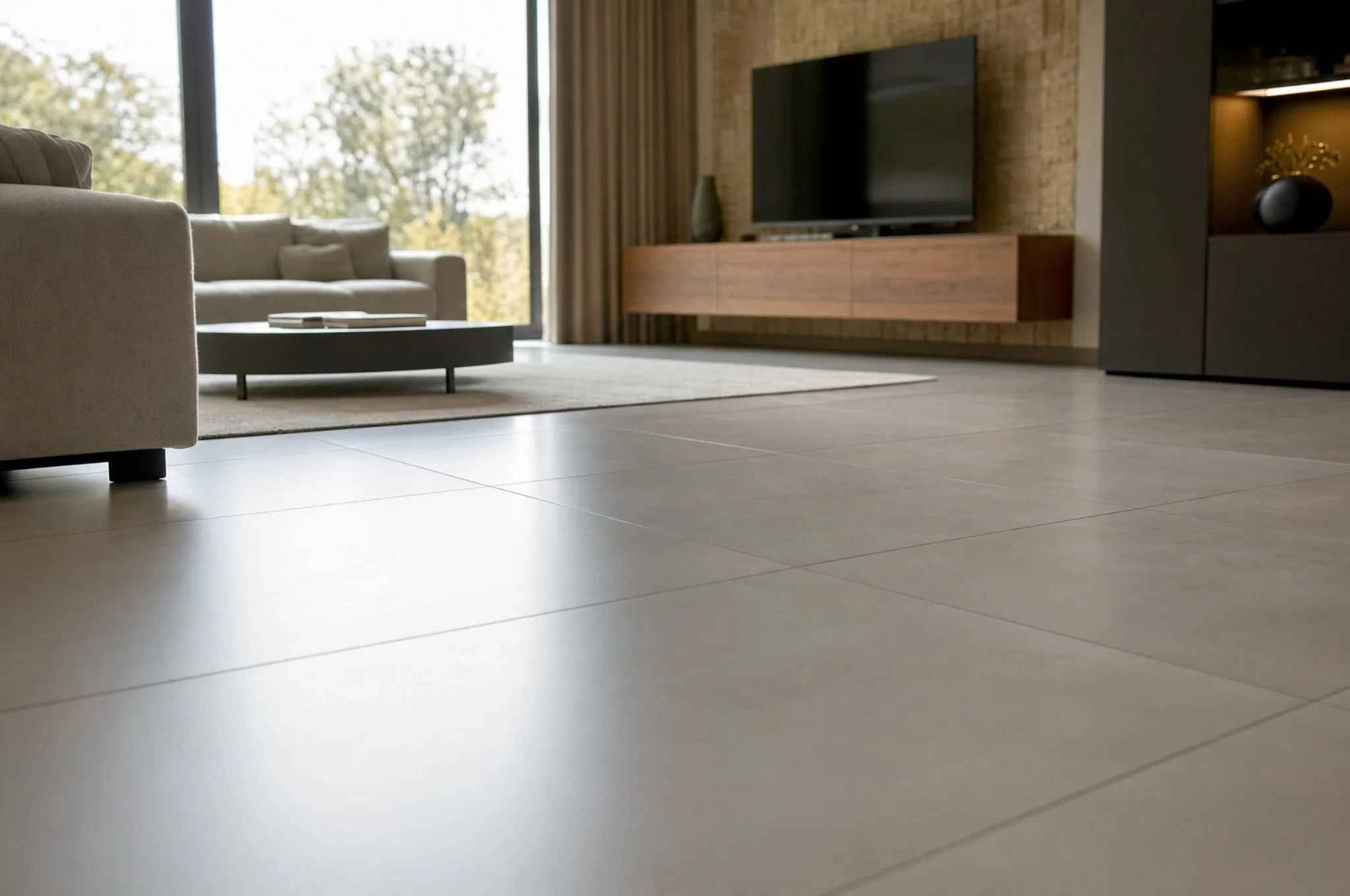
Flatness 3mm under 2m rule · dull sound everywhere · joints OK
⚠ After — defective
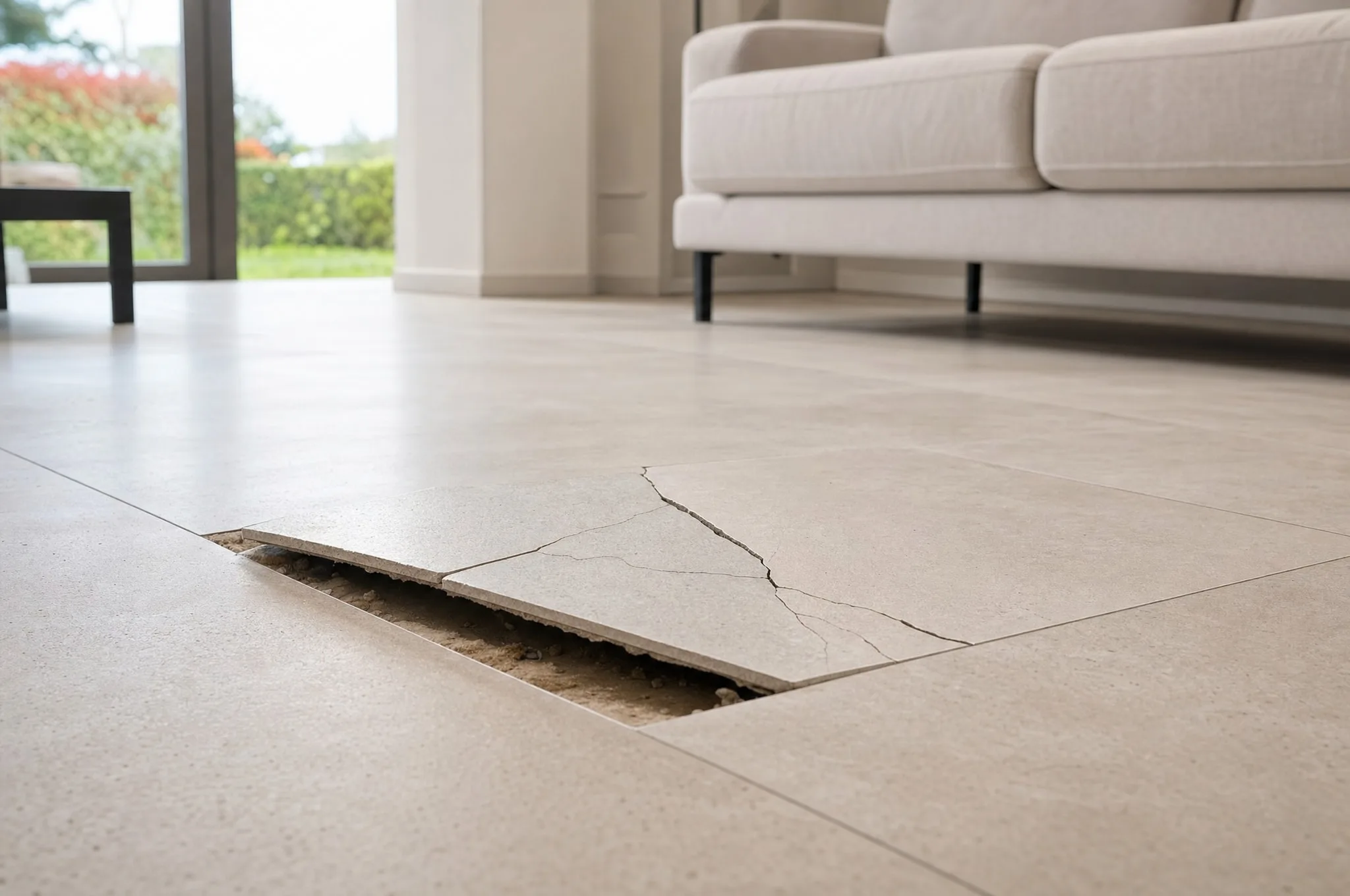
Audible unbonding · hollow joint · to be redone
Reporting procedure in 4 steps
Floor defects can be seen and measured. Chronological and quantified documentation needed.
- 1Test each surface2 m rule placed crosswise in each room, measure the gap under the rule. Sound test on tiles (key or metal coin). Methodical walk on parquet.
- 2Photograph and quantifyHD photo with visible rule, measure the gap in mm. Precise location (room, tile, dimension). Keep the tiler's delivery slip.
- 3Formal noticeRegistered letter to the tiler AND the contractor within 90 days. Attach photos, measurements, standards (DTU 52.2 tiling, NIT 213 CSTC for Belgium).
- 4Floor expert assessmentIndependent tile or parquet expert in case of dispute. Laser flatness measurement, penetrometer sounding. Admissible report · from €380 VAT incl.
Who pays for the repair? Responsibility table
The installer is responsible. The main contractor is jointly liable. Structural slab = ten-year liability.
Defect type
Contractor
Owner
Insurance
Tile loose / hollow sound
✓ two-year warranty
—
—
Missing / cracked joint
✓ two-year warranty
—
—
Slab flatness > 7 mm
✓ ten-year liability
—
ARI
Creaking parquet (joist)
✓ two-year warranty
—
—
Scratch after move-in
—
✓
home insurance
Get an inspection
Independent floor and tile inspection
Laser flatness · sound test · admissible report · €380 VAT incl.
FAQ
Common questions about floors
My tiles sound hollow in several places. What should I do?
Unbonding. Report immediately under two-year warranty. The tiler must lift and re-lay the affected tiles. If extensive, commission an inspection to quantify (sometimes 30+ tiles in a large room).
My concrete slab has 8 mm of gap under a 2 m rule. Abnormal?
Yes, possible ten-year defect. The usual tolerance is 5 mm/2 m (NIT 213 CSTC). Beyond 7 mm, reportable defect. Beyond 15 mm, major defect (tiles unbonding over time, unstable parquet).
My parquet creaks underfoot. Is it serious?
Often a badly screwed joist or a poorly clipped floating parquet. Covered by the two-year warranty. The installer must return to refix or re-clip. Document precise locations.
My tile joints have holes. Covered?
Yes, two-year warranty. Joints must be full, smooth, with no missing material. Covered by perfect-completion warranty (1 year) and two-year warranty. Repair by scraping and re-jointing.
How much does a full tiled room repair cost?
Between €1,800 and €6,000 VAT incl. depending on surface area (m²) and tile type. At the tiler's or contractor's expense if installation defect. Keep the delivery slip and offcuts for repair.